Analyzing Fog of War Mechanics in Real-Time Strategy Titles to Predict Opponent Unit Compositions from Scouting Reports
Written by Rosa Lorenz · Jun 23, 2026
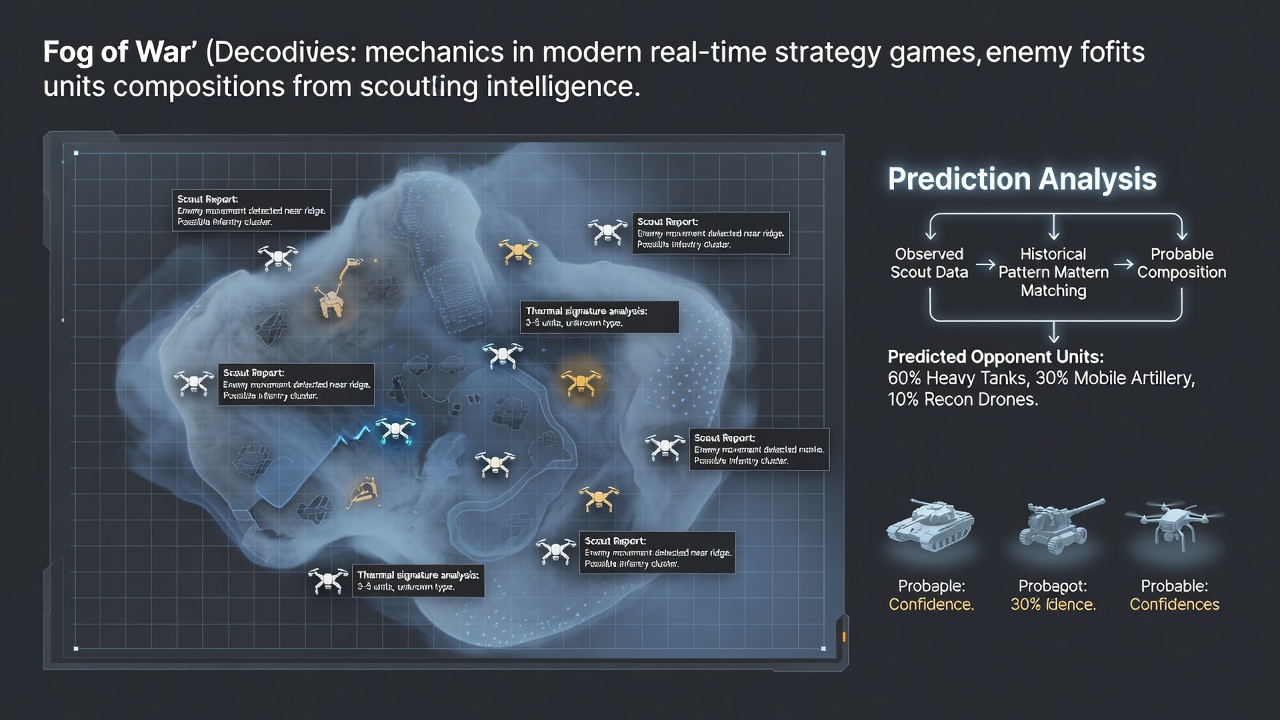
Analyzing Fog of War Mechanics in Real-Time Strategy Titles to Predict Opponent Unit Compositions from Scouting Reports
Real-time strategy titles rely on fog of war systems that restrict player vision to explored areas while hiding enemy movements elsewhere, and analysts have documented how this limitation shapes decision-making during matches. Players gather data through scouting units that venture into enemy territory, and the information collected allows for inferences about unit compositions even when complete visibility remains unavailable. Research from competitive play archives demonstrates that early scout reports often contain enough details to narrow down possible build orders based on observed unit types, resource patterns, and map control indicators.
Core Mechanics of Fog of War Across RTS Platforms
Developers implement fog of war through layered visibility models that update in real time as units move and explore terrain, whereas permanent black zones persist in unexplored regions until revealed. Observers note that this design forces reliance on mobile reconnaissance rather than static vision sources, and studies of titles like StarCraft II show that players who optimize scout paths collect data points faster than those using random movement patterns. Data indicates that partial sightings of production buildings or worker counts provide clues about economic scaling, while sightings of specific combat units hint at tech tree progressions.
Scouting reports typically include timestamps, unit counts, and positional data that feed into predictive models, and those models account for timing windows when certain compositions become viable. Researchers at the University of Alberta have examined these patterns through simulation datasets, finding correlations between early probe sightings and later robotic unit deployments in high-level matches. But here's the thing: incomplete reports require cross-referencing with map-specific choke points and expansion timings to refine predictions accurately.
Methods for Extracting Predictive Signals from Limited Intelligence
Analysts break down scouting data into categories such as unit diversity, production facility presence, and resource denial indicators, then apply probabilistic frameworks to estimate opponent options. One study revealed that players who log scout observations at consistent intervals achieve higher accuracy in composition forecasts compared to those relying on sporadic checks. Patterns emerge when certain units appear together, such as combined arms approaches that pair infantry with vehicle support, and these combinations signal investment in multiple tech branches simultaneously.
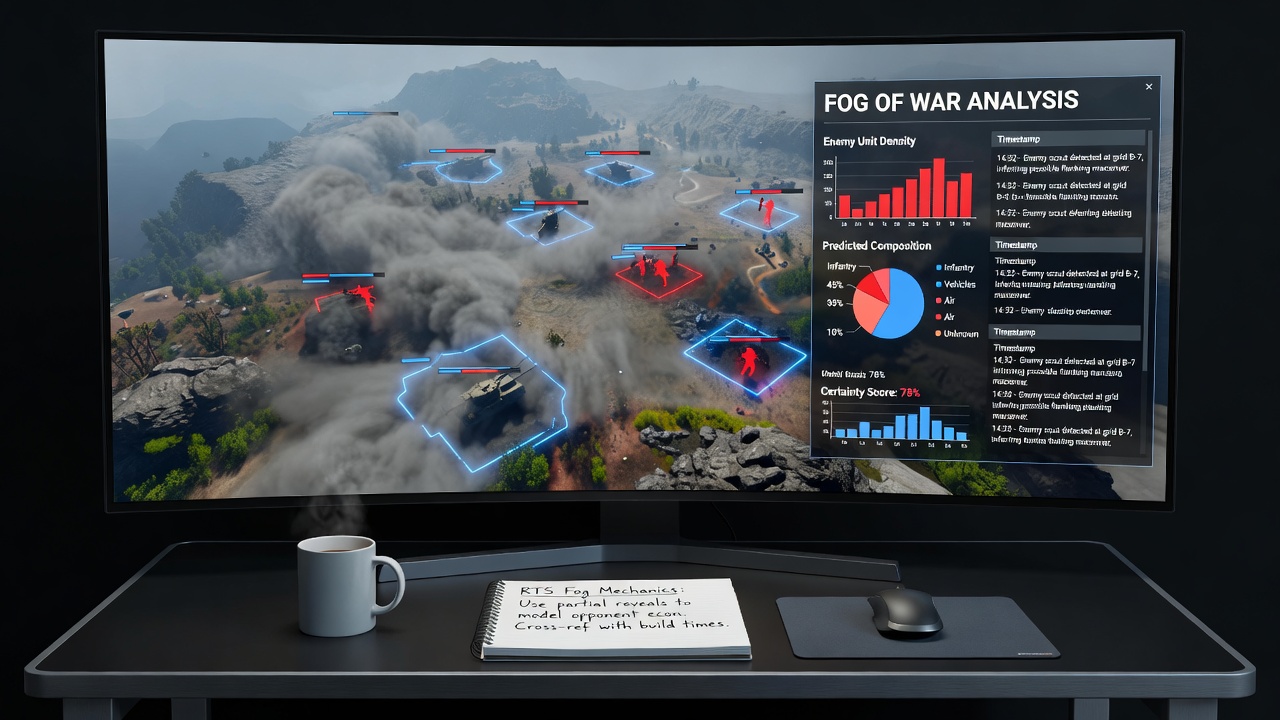
Turns out the timing of first contact often determines how much information a report yields, because early scouts catch opponents before defensive structures obscure key buildings. Experts have observed that counter-scouting measures like patrol routes or detector units complicate data collection, yet determined reconnaissance still yields usable fragments when focused on high-traffic areas. Figures from tournament logs compiled through 2025 highlight how professional teams integrate these fragments into pre-match preparation routines.
Application in Major Titles and Evolving Tools
StarCraft II remains a primary case study for fog of war analysis due to its transparent replay systems that let researchers replay matches and isolate scout moments, and similar mechanics appear in Age of Empires IV where villager movements and building placements provide parallel signals. In both games, predictive accuracy improves when scouts identify upgrade indicators or multiple production facilities operating in parallel. Canadian gaming research groups have compiled datasets showing that composition predictions based on three or more confirmed unit types reach reliability thresholds faster than those relying on single sightings.
June 2026 brought updates to several legacy RTS engines that refined fog of war rendering for better performance on modern hardware, and these changes allowed for more detailed partial vision layers without altering core prediction challenges. Industry reports from the Entertainment Software Association note increased interest in AI-assisted scouting tools that process report data automatically, although human interpretation continues to dominate high-stakes play. What's interesting is how community-developed overlays now highlight potential composition branches based on input scouting logs, providing visual aids without replacing player judgment.
Limitations and Refinement of Predictive Approaches
Even detailed reports leave room for deception when opponents employ feints or rapid tech switches after initial contact, and analysts account for these variables by weighting recent observations more heavily than older ones. Evidence suggests that map size and terrain complexity influence report quality, with larger battlefields requiring more scouts to maintain coverage across multiple fronts. Those who've studied professional matches know that successful predictions often combine scouting data with opponent history, creating layered profiles that adjust for known preferences in unit selection.
External factors such as tournament patch cycles can shift viable compositions mid-season, requiring constant recalibration of predictive frameworks. Academic sources from institutions across Europe have contributed papers on information theory applications in strategy games, emphasizing how fog of war functions as an asymmetric information problem rather than a simple visibility constraint.
Conclusion
Fog of war mechanics continue to define information gathering in real-time strategy titles, and scouting reports remain the primary tool for anticipating opponent unit compositions through systematic observation and cross-referencing. Predictive methods built on these reports have grown more sophisticated with access to replay archives and community tools, yet core challenges around incomplete data persist across platforms. Ongoing developments in game engines and analysis software suggest further refinements ahead, while established patterns from competitive play provide a foundation for continued study.