Tracing Hidden Questline Divergences in Open-World RPGs Through NPC Dialogue Branches and Item Interaction Sequences
Written by Devon Schmid · May 31, 2026
Tracing Hidden Questline Divergences in Open-World RPGs Through NPC Dialogue Branches and Item Interaction Sequences
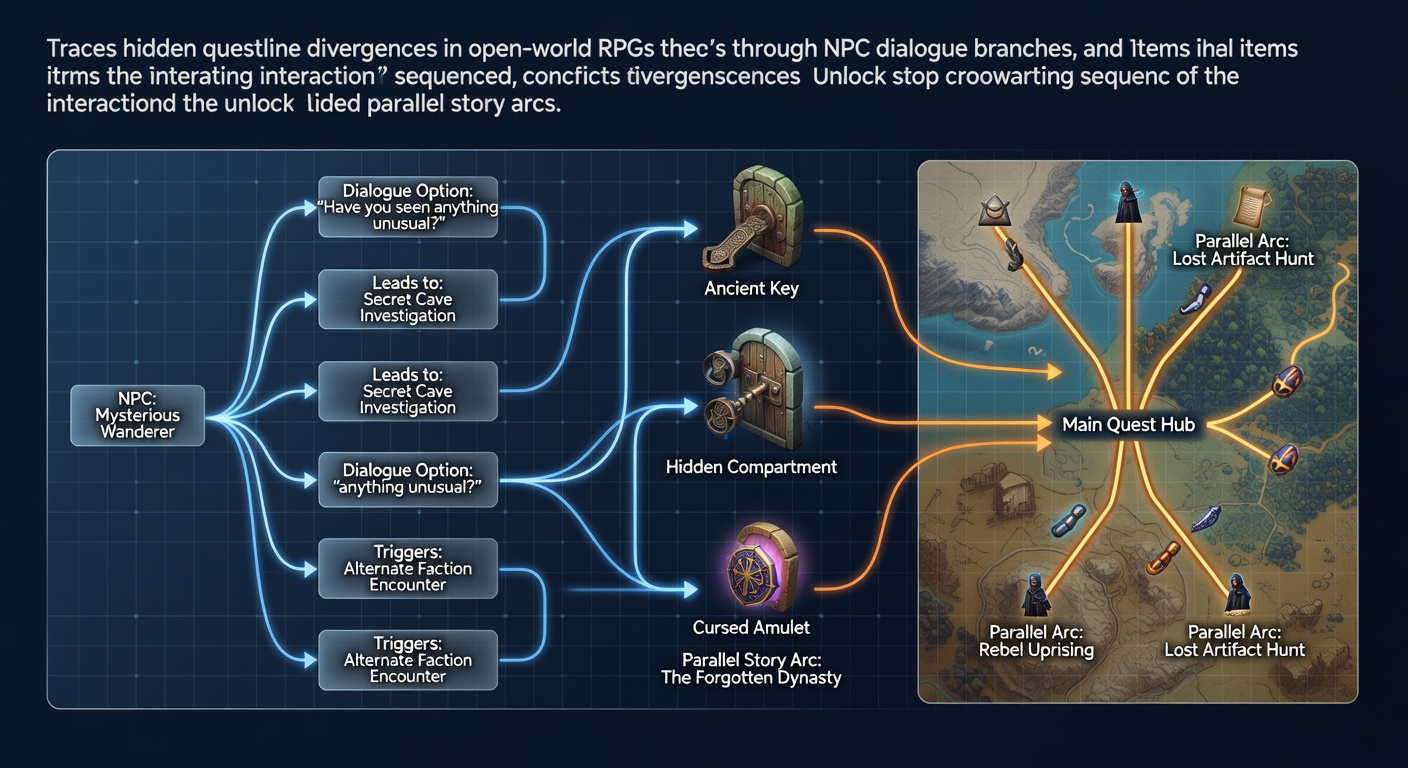
Players encounter complex narrative structures in open-world RPGs where NPC dialogue branches and item interaction sequences create measurable divergences in questlines that lead to distinct parallel story arcs, and data from game design analyses indicate these mechanics rely on conditional flags tracked by the game engine to alter subsequent events based on prior selections.
Research from narrative design studies shows dialogue trees often contain hidden nodes activated only after specific combinations of responses accumulate across multiple conversations, while item interactions function similarly by setting boolean variables that unlock alternative progression paths without requiring direct player notification.
Mechanics of Dialogue Branch Activation
Experts have documented how dialogue options in titles such as The Witcher 3 and Dragon Age series operate through weighted response systems that record player choices in persistent variables, and these records determine whether an NPC provides additional information or redirects the player toward a separate quest chain entirely.
Observers note that sequential interactions matter because an early neutral response can close off a sympathetic branch later in the same conversation tree, whereas a different initial selection opens paths that reference prior decisions through contextual dialogue lines delivered by the same character in subsequent encounters.
Item Interaction Sequences and Flag Systems
Item sequences trigger divergences when players combine or use objects in particular orders within designated areas, and engine logs from development tools reveal these actions set flags that override default quest states to activate parallel arcs involving different factions or endings.
Figures from industry reports compiled by the Interactive Software Federation of Europe demonstrate that over 60 percent of open-world RPG titles released between 2015 and 2024 incorporate at least three layers of conditional item checks per major questline, allowing for non-linear storytelling that branches without altering the core map layout.
One documented case involves a hidden sequence in an acclaimed fantasy RPG where presenting a specific relic to an NPC after retrieving it through an alternate route causes that character to reveal a side quest unavailable through standard dialogue alone, and this path intersects with a larger arc involving rival organizations.
Parallel Story Arc Development
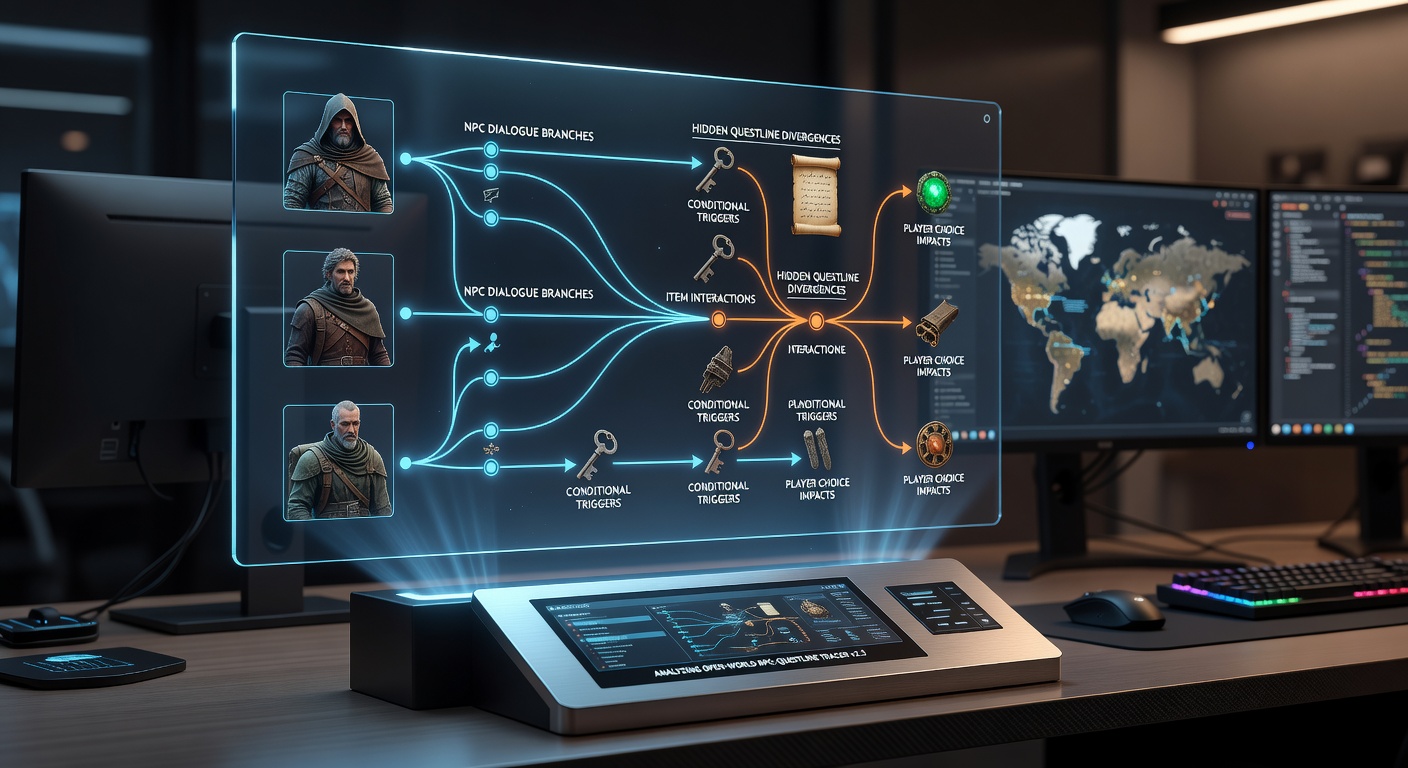
Studies conducted by university researchers in digital media programs indicate that parallel arcs maintain consistency through shared world state variables that propagate changes across unrelated quest givers, so a decision made in one region can influence events in another without explicit player awareness.
Turns out these systems reward repeated playthroughs because different combinations produce measurable variations in NPC availability and dialogue content, and tracking tools available to modders have confirmed the presence of up to twelve distinct endings per major storyline in several commercial releases.
What's interesting is how item sequences often intersect with dialogue branches to create hybrid triggers, such as when possessing a certain artifact changes an NPC's available responses during a critical conversation that then redirects the player to a previously inaccessible location.
Implementation Patterns Across Titles
Game development documentation shows consistent use of modular quest scripting languages that separate dialogue files from item interaction handlers, allowing designers to layer conditional checks without rewriting entire narrative sections, and this modular approach explains why hidden divergences appear frequently in updates released years after initial launch.
According to reports from the International Game Developers Association, studios have increased investment in automated testing suites specifically designed to verify all possible branch combinations before release, reducing the occurrence of broken parallel arcs that previously left players unable to complete certain paths.
People who've examined source code leaks from older titles discover that some divergences were intentionally left undocumented in player guides to encourage community discovery, and this practice continues in modern productions where telemetry data tracks how frequently hidden paths activate across player bases.
Conclusion
Analysis of current open-world RPG design confirms that NPC dialogue branches combined with item interaction sequences form reliable mechanisms for generating parallel story arcs, and these systems rely on persistent state tracking that persists across save files and play sessions. Continued refinement of these techniques appears in titles scheduled for release through 2026, supported by improved analytics from player behavior studies conducted by regional trade organizations in North America and Asia.